Why Startups Need Lexapar: Hiring, IP, Vendors & Fundraising Contracts
Every startup has a moment when legal reality arrives unannounced.
For one fintech founder, it came during a Series A diligence call, when an investor asked a simple question: “Can you confirm that all your core code is owned by the company?” The answer was not simple. Two early developers had worked as “friends helping out.” No IP assignment. No paper trail. The round stalled for six weeks.
For another startup, it was an early employee who left - and claimed ownership over a feature that later became central to the product.
These stories are not exceptions. They are patterns. And they explain why modern startups need legal systems, not last-minute lawyering.
This is where Lexapar fits in - not as a traditional law firm, and not as a generic AI tool, but as a legal delivery platform that combines AI-driven contract intelligence with expert human oversight. It helps startups move fast without creating invisible legal landmines.
Let’s look at where things usually go wrong - and how Lexapar changes the outcome.
1. Hiring: When “Standard” Contracts Aren’t Standard Enough
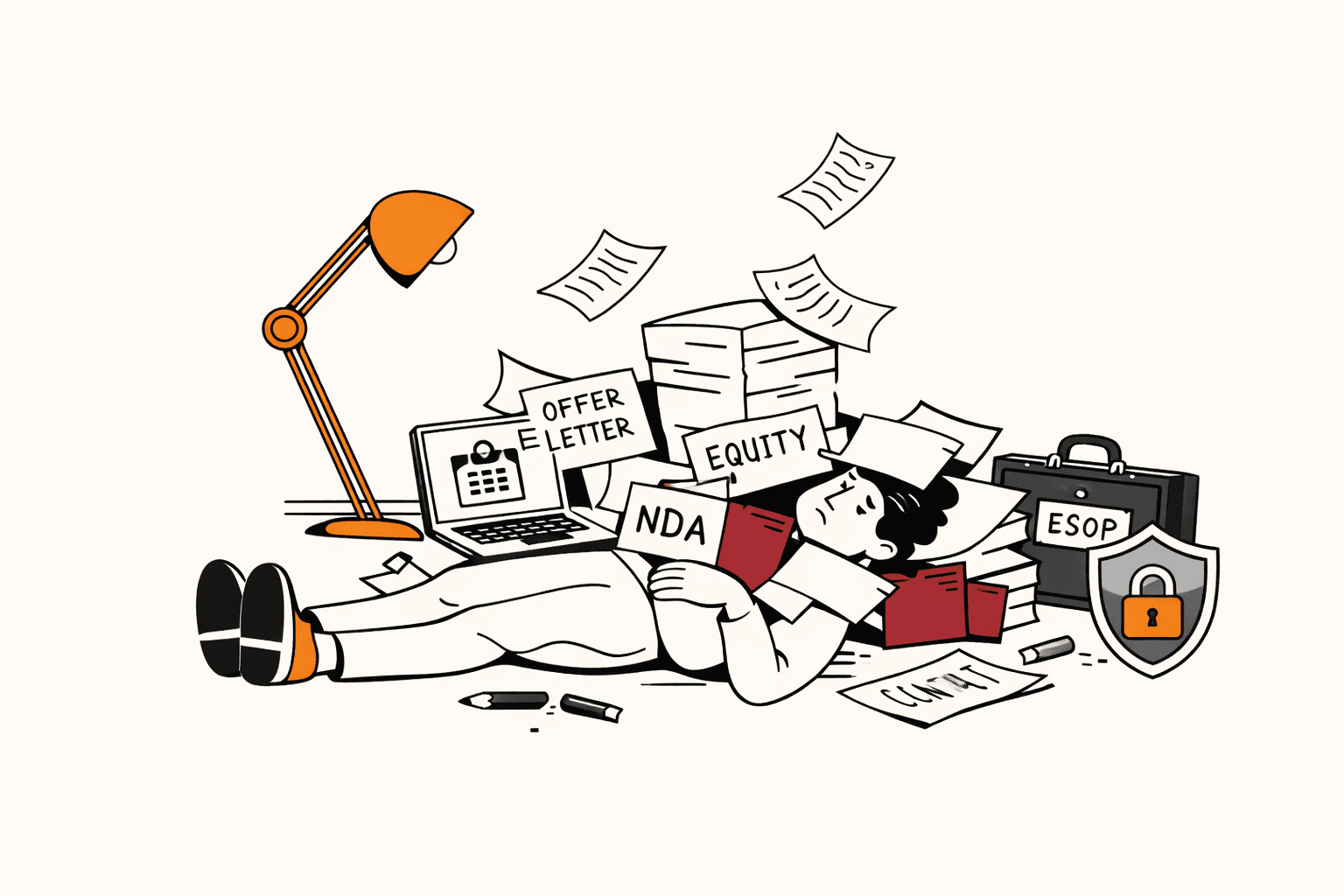
Consider a SaaS startup hiring its first five employees. The founder downloads an offer letter template, tweaks the salary, adds “equity to be discussed,” and sends it out. Everyone’s excited. No one reads the fine print.
Two years later, during fundraising, investors notice inconsistencies:
Equity promises aren’t aligned with the ESOP pool
Vesting terms differ across employees
Confidentiality clauses are weak or missing
Fixing this retroactively is painful. Employees push back. Lawyers rewrite documents. Trust erodes.
Lexapar helps founders get hiring right, from the start. Employment agreements, consultancy contracts, NDAs, and equity documents are drafted and reviewed with startup-specific logic baked in - vesting, IP assignment, confidentiality, termination, all aligned.
Instead of founders guessing what’s “standard,” Lexapar flags risks early and ensures documents are consistent across the company. Hiring becomes a foundation - not a future liability.
2. IP: The Startup That Built Something It Didn’t Own

A health-tech startup spent a year building a proprietary analytics engine. The code was elegant. The traction was real. But during acquisition talks, a problem surfaced: a core module had been written by a freelance developer abroad - paid, but never formally assigned.
The acquirer walked.
IP mistakes are brutally unforgiving because they strike at the heart of value. Investors don’t fund ideas; they fund ownership.
Lexapar prevents this by embedding IP ownership and assignment logic directly into contracts - founder agreements, employee contracts, vendor arrangements, and NDAs. The AI helps surface missing clauses and inconsistencies; the experts ensure enforceability.
For startups building software, AI models, or proprietary processes, this clarity is non-negotiable. Lexapar ensures that what the company builds is unquestionably its own - before anyone else asks.
3. Vendors & Contracts: Death by a Thousand Clauses

A fast-growing startup signs a cloud services agreement in a hurry. Six months later, a service outage occurs - and the contract reveals unlimited liability and no meaningful exit rights.
Another startup agrees to a vendor’s “standard” terms, only to discover during an audit that compliance obligations far exceed their capacity.
These aren’t dramatic courtroom battles. They’re slow, expensive drains on time, money, and focus.
Lexapar transforms how startups handle contracts. Upload an agreement, and the platform highlights:
Risky indemnities
Liability exposure
Missing termination rights
Deviations from your standard terms
Founders don’t need to read every clause line by line. They see what matters, fast. High-risk contracts can be escalated for expert review; routine ones move quickly.
The result: startups regain control of their commercial relationships without slowing down growth.
4. Fundraising: The Difference Between “Interesting” and “Investable”

Investors often say they back founders. In reality, they back systems.
A clean cap table. Consistent employment agreements. Clear IP ownership. Well-structured vendor contracts. These are signals of maturity - often more convincing than slides.
One consumer startup learned this the hard way. The product was strong, metrics solid - but due diligence uncovered messy documentation, missing board approvals, and inconsistent equity issuances. The round closed, but at a lower valuation and with heavier investor protections.
Lexapar helps startups prepare for diligence before it begins. Legal documents are structured, searchable, and review-ready. Risks are identified early, not under pressure. Founders enter fundraising from a position of confidence rather than defense.
In competitive funding environments, that difference matters.
Why Lexapar Works When Other Tools Don’t
Legal AI is everywhere - but law is not just text generation. It’s judgment, context, and consequence. Lexapar’s strength lies in its hybrid model:
AI for speed, extraction, comparison, and scale
Humans for nuance, interpretation, and final accountability
This avoids the twin failures startups fear most: expensive traditional law firms and unreliable automation. Lexapar sits in the middle - fast, practical, and defensible.
Conclusion: Legal Isn’t a Side Quest
Startups don’t fail because they lack ideas. They fail because small legal shortcuts compound into large strategic failures.
Lexapar helps founders avoid those shortcuts - quietly, efficiently, and at scale. It enables startups to:
Hire without future disputes
Own what they build
Contract with clarity
Fundraise with confidence
In today’s startup ecosystem, legal discipline is not bureaucracy. It is a competitive advantage.
And the startups that understand this early are the ones still standing later.
Build Fast. Stay Legally Investable.
Lexapar helps startups hire, protect IP, manage vendors, and raise capital without hidden legal risk
