How Growing Startups Move from Legal Chaos to Predictable Legal Operations
Startups often scale faster than their legal infrastructure. Contracts, vendor obligations, and regulatory requirements accumulate faster than they are tracked. Without a systematic approach, companies accumulate structural risk that is invisible until it surfaces in diligence, audits, or compliance reviews.
Predictable legal operations are not built on templates or reactive review. They require visibility, standardization, and integrated workflows that make risk measurable and manageable. Legal becomes infrastructure, not a transactional service.
Sources of Structural Legal Risk
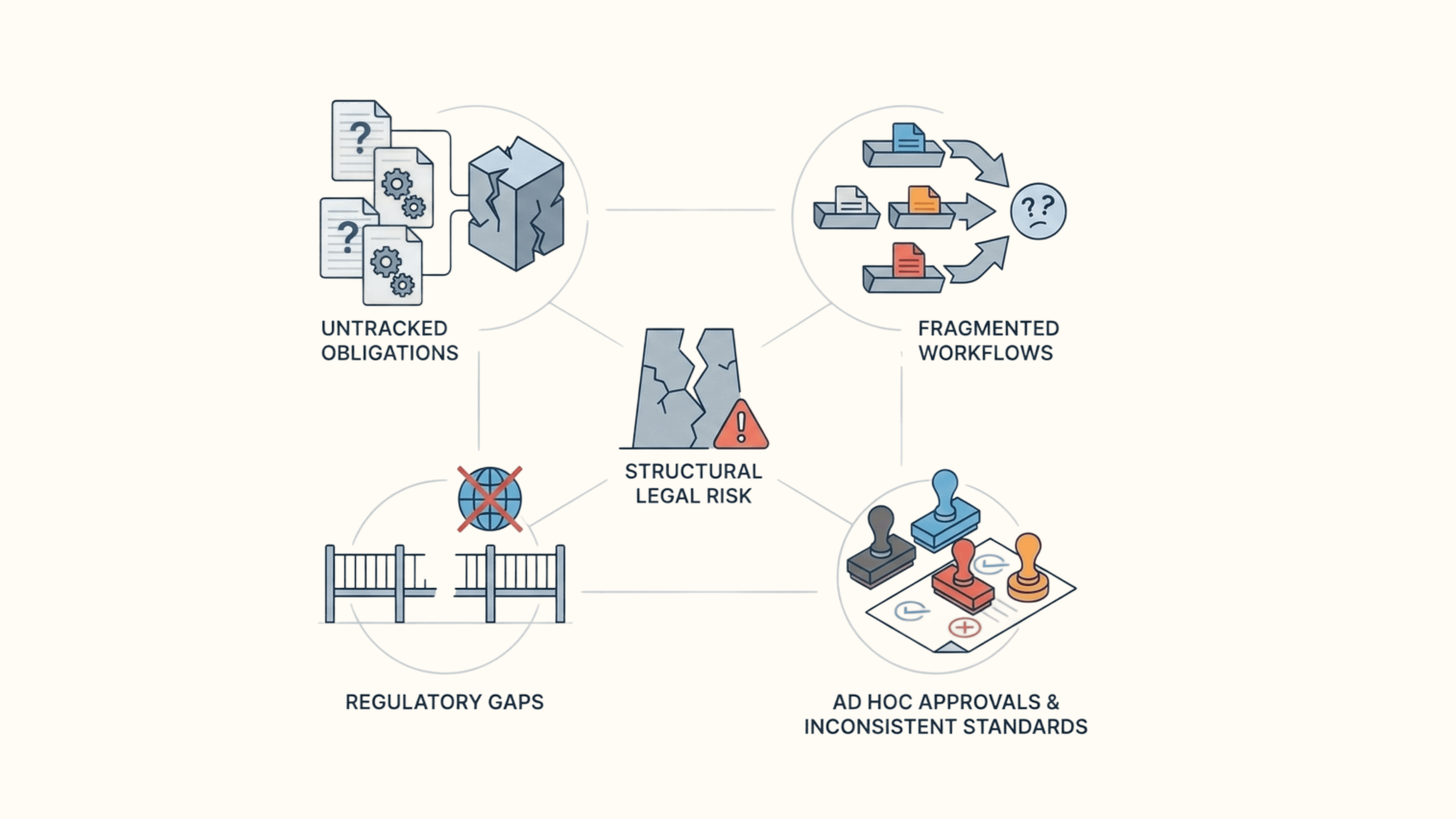
Legal disorder in growing startups is structural rather than volumetric. It typically arises from four interconnected issues:
Untracked obligations
Liability clauses, audit commitments, termination rights, data processing obligations, and regulatory representations are dispersed across multiple agreements. Without centralized mapping, exposure is unmanaged. Even small deviations from preferred terms can accumulate, creating potential conflicts with regulatory requirements or enterprise procurement expectations.Fragmented workflows
Contract review, approvals, and signature processes often occur in parallel systems or tools with minimal oversight. This fragmentation prevents consistent application of risk policies, slows execution, and increases the chance of conflicts or overlooked obligations.Regulatory gaps
Cross-border expansion introduces licensing, data protection, and localization requirements that are often assessed on a deal-by-deal basis. Without integrated oversight, compliance gaps emerge, potentially triggering fines, operational delays, or reputational damage.Ad hoc approvals and inconsistent standards
When negotiations are handled individually by different teams or executives, deviations from preferred risk profiles accumulate unnoticed. Over time, these deviations reduce negotiating leverage and may create unexpected liabilities.
Moving from Reaction to Control
Predictable legal operations begin with recognition that legal control is infrastructure. This requires three critical shifts:
Centralized visibility – Every contractual and regulatory obligation must be mapped and tracked in a single source of truth. This provides leadership with real-time insight into exposure and upcoming obligations.
Standardized workflows – Contract review, approvals, and documentation must follow consistent processes. Standardization enforces risk policy, reduces errors, and ensures that obligations are captured correctly across agreements and jurisdictions.
Continuous monitoring – Legal oversight cannot be static. Automated alerts, obligation tracking, and reporting mechanisms are essential to ensure that compliance, renewal, and audit deadlines are met without reactive firefighting.
Practical Implementation
Implementing predictable legal operations does not require expanding headcount in proportion to deal flow. The objective is not more lawyers but better systems.
Obligation mapping centralizes visibility of contractual commitments, vendor obligations, and regulatory requirements. For example, every indemnity clause, termination right, or data privacy obligation is logged, categorized, and linked to relevant risk policies.
Standardized templates and review processes ensure that deviations from preferred terms are flagged and documented. This reduces risk exposure while maintaining operational flexibility.
Cross-functional integration connects legal oversight with finance, compliance, and procurement. When legal infrastructure is embedded in operational workflows, risks are identified and mitigated earlier, reducing bottlenecks and last-minute escalations.
Continuous monitoring and reporting provide leadership with actionable insights. Dashboards can highlight expiring obligations, upcoming audits, or deviations from standard clauses, allowing decision-makers to act before risks become material.
Lexapar as Risk Infrastructure
Platforms like Lexapar operationalize this approach. Lexapar consolidates obligations, enforces workflow standards, and provides integrated visibility across contracts and regulatory commitments. By turning legal into measurable infrastructure, startups gain control without adding disproportionate headcount.
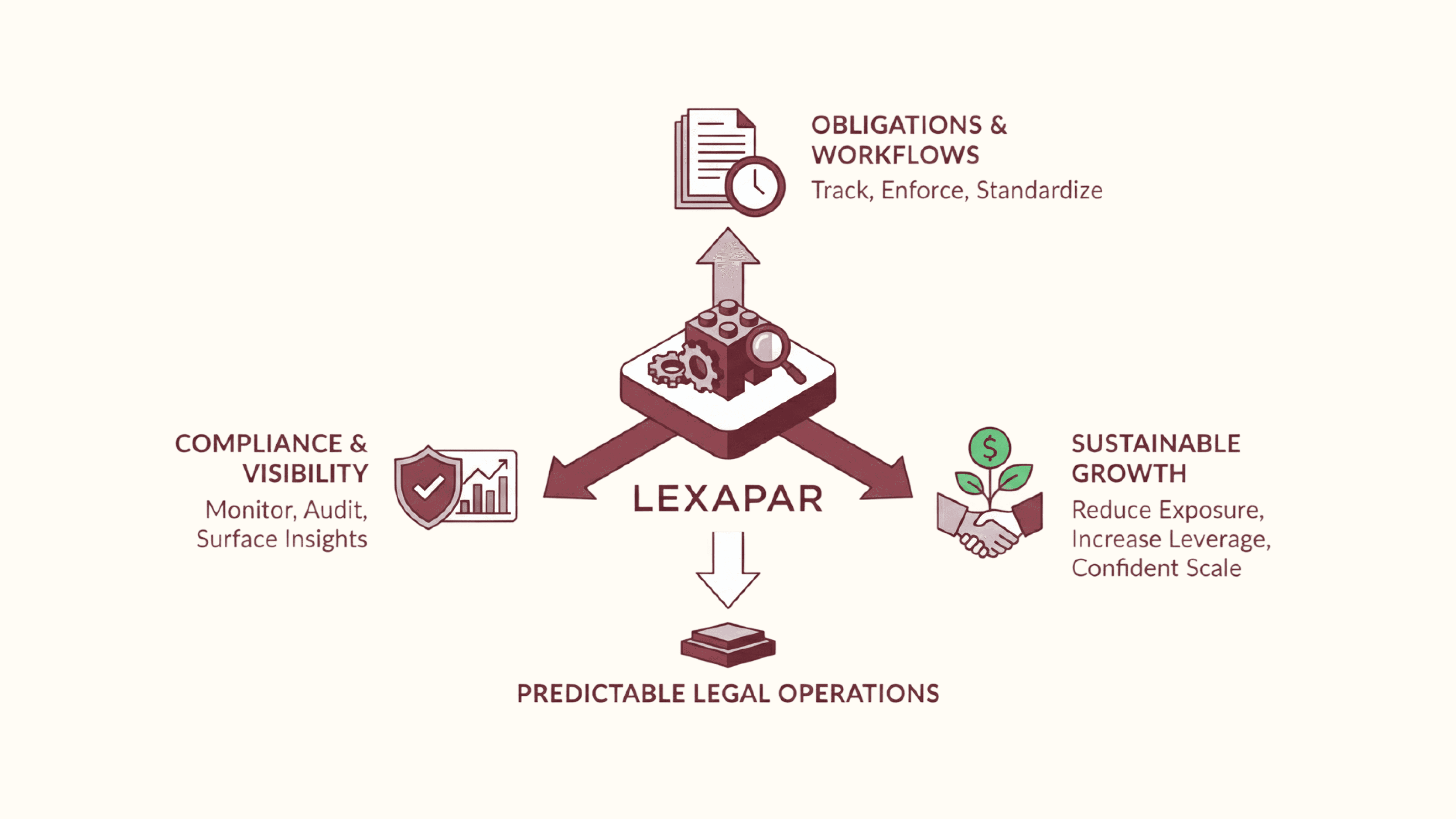
Lexapar enables companies to:
Track obligations across vendors, customers, and internal agreements.
Ensure standardized approvals and risk enforcement.
Monitor compliance and audit readiness continuously.
Surface actionable insights for leadership decisions.
Startups that implement predictable legal operations reduce exposure, increase negotiating leverage, and make diligence straightforward. Legal stops being a bottleneck and becomes a measurable component of operational risk management. By embedding legal infrastructure into the operating model, companies can scale more confidently, respond faster to opportunities, and mitigate risk before it crystallizes.
In high-growth environments, transactional legal work is insufficient. The most effective organizations treat legal as infrastructure, integrating obligation mapping, workflow standardization, and continuous monitoring into operational processes. Lexapar enables this transformation, giving startups the architecture to manage risk proactively rather than reactively.
Predictable legal operations are not optional for scaling startups. They are foundational to sustainable growth, enabling companies to operate with confidence, control, and visibility as they expand across markets, products, and geographies.
Turn Legal Into Operational Infrastructure
Centralize obligations, standardize workflows, and scale with visibility.
