Automating Contract Approvals: A Workflow Guide for Growing Teams
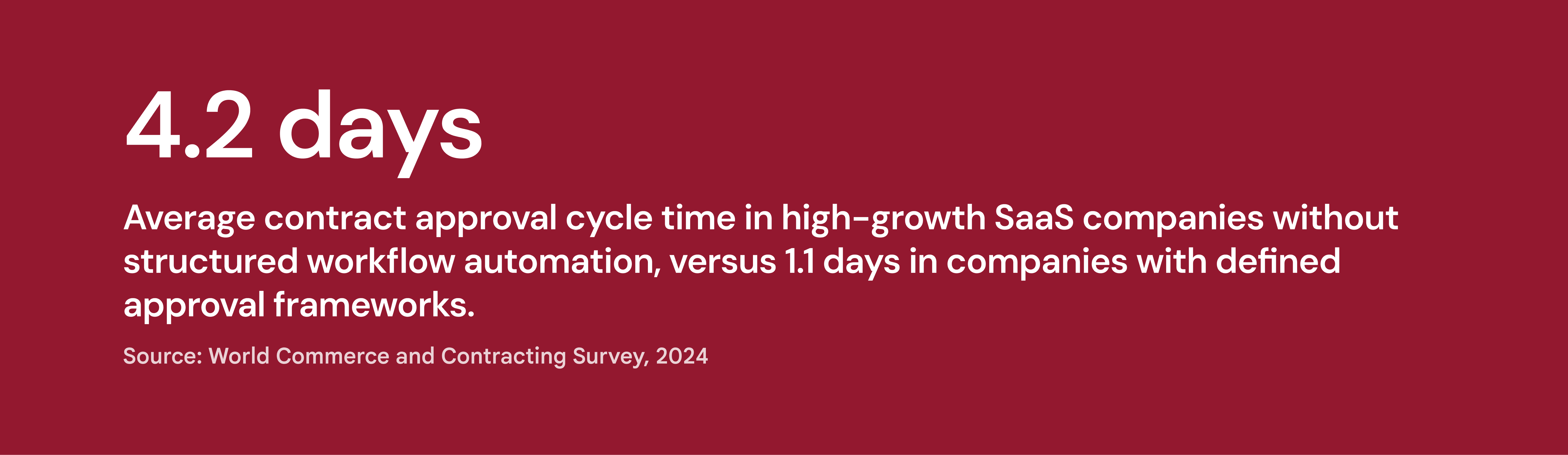
Contract approvals are one of the most consistent sources of operational delay in growing companies. A sales contract finishes negotiation. It sits waiting for sign-off. The deal is ready to close but cannot move until legal, finance, or a founder reviews and approves. Across dozens of deals, this delay compounds into a material drag on commercial velocity.
The instinctive solution is to add more legal bandwidth. More reviewers. Faster turnaround. But the problem is rarely a shortage of legal capacity. It is a shortage of structure. Without defined approval workflows, every contract is treated as a new decision regardless of how many times the same issues have already been resolved.
Why Manual Approval Processes Break Under Volume
Manual contract approval works reasonably well when volume is low and the same people are always involved. When deal flow increases, when the team changes, or when multiple contracts are in review simultaneously, the problems become visible.
Approval requests arrive through different channels: email, Slack, shared drives. There is no standardized format so each review requires the reviewer to first understand what they are being asked before they can assess it. Decisions are made but not recorded. Exceptions are approved informally. Nobody knows how many contracts are currently in the queue or where each one is in the process.
The result is inconsistent turnaround, inconsistent decisions, and a growing body of approved contracts with no documented rationale for why specific positions were taken.
What a Structured Approval Workflow Requires
A risk-tiered routing system. Not every contract needs the same level of scrutiny. Standard agreements within pre-approved parameters should move through a streamlined path. Contracts with material deviations, unusual indemnity structures, or regulatory implications require a different route. The routing decision should be systematic, not ad hoc.
Defined approval authority. Different thresholds require different approvers. A minor change to payment terms requires different oversight than a modification to data protection obligations or a liability cap. Without pre-defined authority matrices, every deviation defaults to the highest level of approval, creating unnecessary bottlenecks.
A documented decision trail. Every approval and every exception should be recorded with context. Who approved it. What alternatives were considered. What risk was accepted. This record is not administrative overhead. It is the institutional memory that makes future reviews faster and makes diligence coherent.
Where Automation Fits and Where It Does Not
Automation accelerates the process at the routing, notification, and tracking layer. It does not replace legal judgment on complex deviations. The goal is to remove friction from decisions that do not require judgment, so that legal capacity is concentrated on the decisions that do.
Lexapar builds this structure into the approval workflow. Standard contracts route automatically based on defined risk parameters. Deviations get flagged and routed to the appropriate approver with context. Every decision is recorded against the relevant legal standard. Over time this creates an approval history that reduces the time spent on recurring issues and makes the rationale behind past decisions immediately retrievable.
Build approval workflows that scale with your deal volume
Lexapar replaces ad hoc approval chains with structured, documented workflows that keep deals moving without accumulating hidden risk.
